
Business Automations and Integrations That Keep Work Moving.
An automation is not valuable because two apps can connect. It is valuable when a real business process becomes faster, more consistent, easier to observe, and recoverable when something goes wrong.
Loskutech designs and manages defined workflows that connect approved systems, route information, reduce repetitive work, and make failures visible.
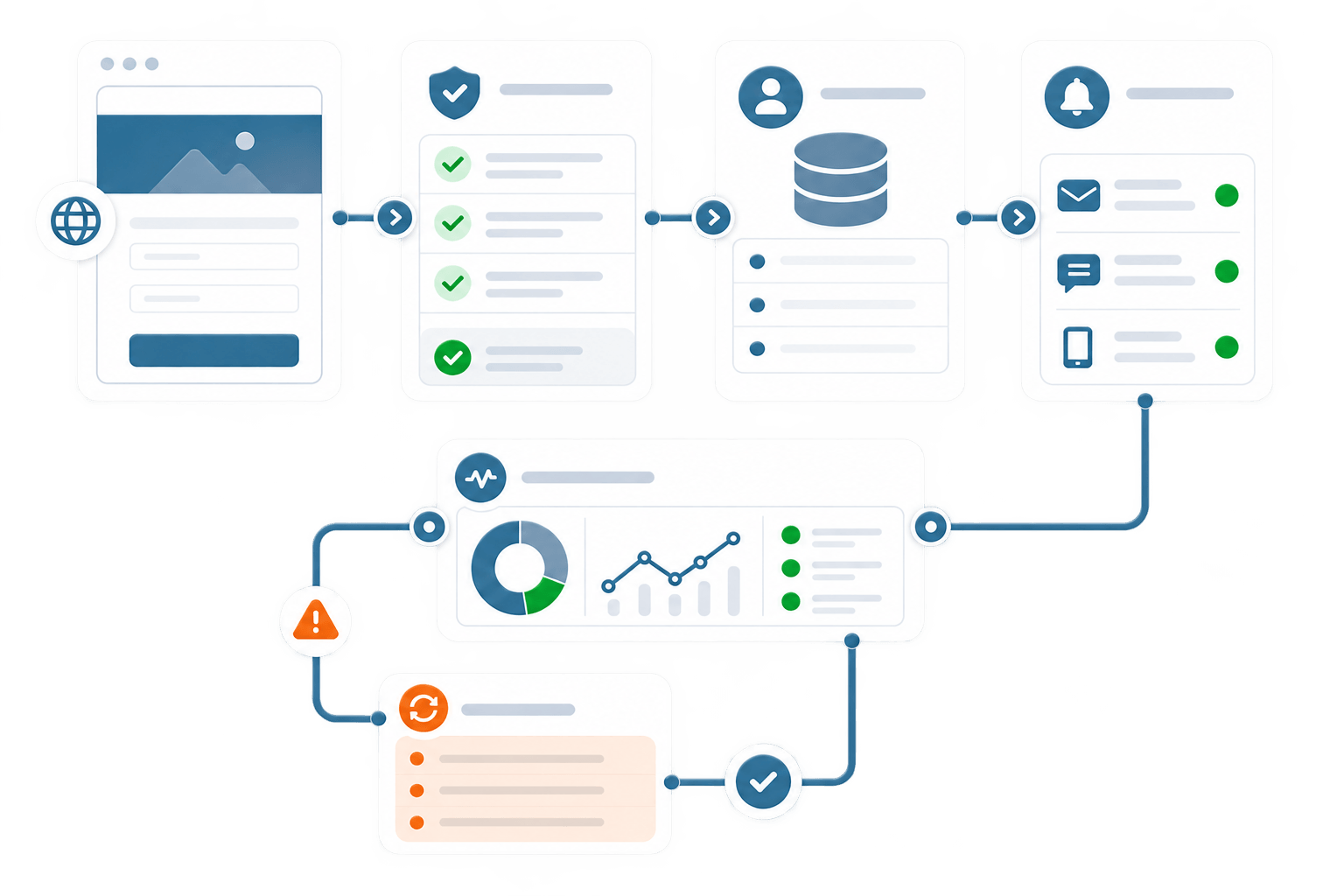
Defined automation use cases.
A scoped engagement can include one or more named workflows such as:
Lead routing and notifications
Send website inquiries to the correct person or system, create the agreed record, notify responsible users, and make failed delivery visible.
Appointment and reminder workflows
Connect approved booking events to reminders, confirmations, internal tasks, or follow-up steps with defined consent and timing rules.
Review-request workflows
Trigger an approved request after a real completed service without review gating, manipulation, or unsupported customer claims.
CRM and system synchronization
Move approved fields between named systems according to a written data map, direction, precedence, and conflict rule.
Scheduled reporting and operational summaries
Collect approved data on a defined schedule, create a repeatable summary, and notify the responsible owner when the job completes or fails.
API, webhook, and custom integration work
Connect systems through supported interfaces with documented authentication, input and output schemas, validation, rate- limit handling, retries, timeouts, and ongoing responsibility.
AI-assisted workflow steps
Use a model for a narrow, reviewed task when the expected output, evaluation method, sensitive-data boundary, human approval, failure behavior, and cost are documented. High-impact decisions remain under appropriate human control.
Reliability means more than a successful demonstration.
The happy path running once does not make a workflow production-ready.
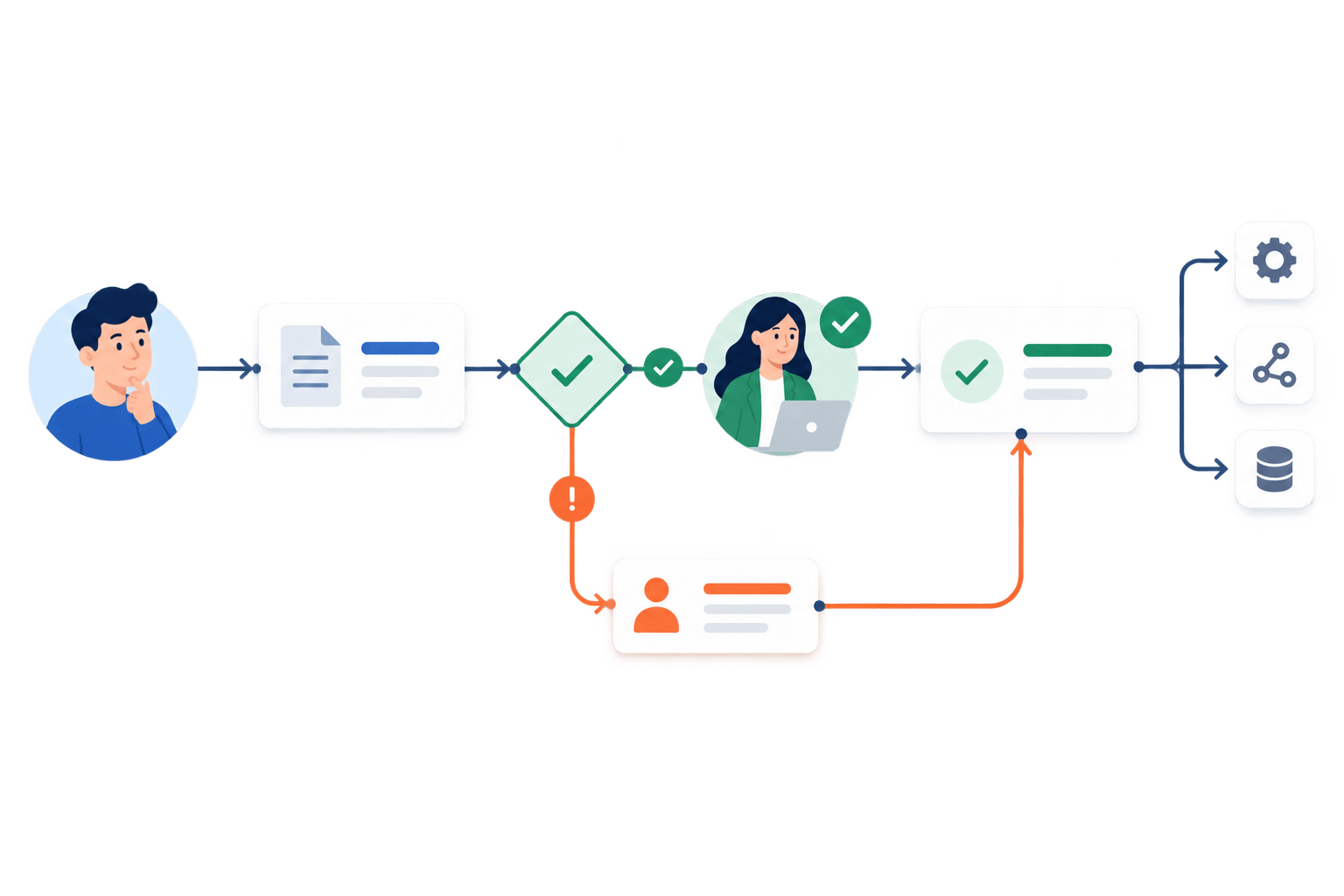
Depending on the risk and scope, Loskutech can define and test:
Data, access, consent, and human approval.
Production accounts and business data remain client-owned whenever the platform supports it. Loskutech uses approved delegated access, service accounts, API keys, or OAuth scopes rather than shared human passwords.
The workflow moves only the data required for the business purpose. Sensitive messages, regulated claims, payments, deletions, approvals, identity decisions, and other high-impact actions require explicit rules and human review where appropriate.
Email, SMS, calls, review requests, and other customer communication must follow the approved consent, frequency, content, and escalation rules supplied by the client and applicable providers.
Managed automation after launch.
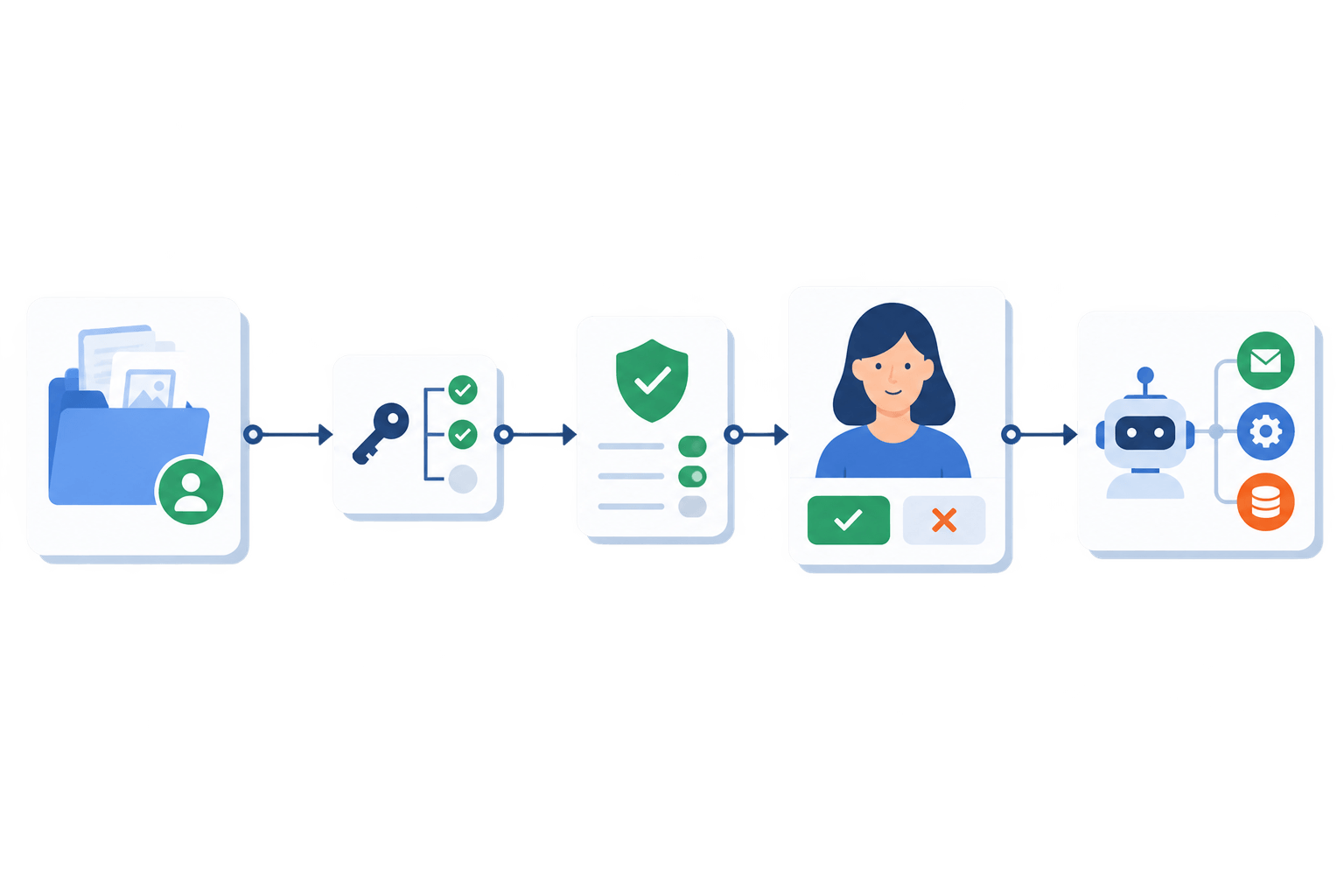
A managed automation scope can include version control, monitoring, usage and cost review, incident handling, vendor- change review, small defined adjustments, documentation, and offboarding support.
The agreement states the workflow volume assumptions, included systems, execution limits, response targets, third-party costs, and change boundaries.
What is not included by default.
Automations & Integrations does not imply:
Unlimited workflows, executions, changes, connectors, or support.
General server administration, office IT, or managed cybersecurity operations.
A custom CRM, customer portal, multi-tenant platform, or enterprise software system.
Guaranteed vendor uptime, API stability, delivery, model accuracy, or carrier behavior.
Unsupervised high-impact decisions or unlawful automation.
The workflow is complete when the process, exceptions, failures, recovery, ownership, data boundaries, and operating costs are documented and accepted.
The automation process.
Document the repeated problem, owner, volume, value, timing, systems, exceptions, data, and manual fallback.
Define the trigger, inputs, decisions, actions, outputs, completion condition, no-action conditions, precedence rules, and acceptance behavior.
Configure the approved systems, access, authentication, data mapping, reliability controls, monitoring, and representative test cases.
Run controlled production tests, verify real operators can recover or escalate, and record approval.
Monitor executions, failures, usage, cost, vendor changes, incidents, and scoped improvements according to the managed agreement.
Define the process before choosing the tool.
Frequently asked questions
Fit depends on supported interfaces, account ownership, available authentication, data sensitivity, vendor limits, process stability, cost, and the ability to test and recover. A connector existing does not automatically make an integration appropriate.
Automate a defined process, not an assumption.
A short workflow discovery identifies whether the process is stable, measurable, supportable, and worth automating.