Show buyers the company behind the catalog
MotivBrand is a family-run Los Angeles company serving union locals and labor organizations across the United States.
Its work extends beyond promotional merchandise into custom union branding, original illustration, apparel, USA- and union-made product options, banners and displays, safety wear, member kits, logo renewal, and production support.
The current team includes leadership, sales, operations, and dedicated illustration roles, and the company traces its history to 1979.
Publicly indexed legacy pages included placeholder project cards, theme language unrelated to the union business, generic scheduling and shop structures, and older provider attribution.
The redesign had to close the gap between a company founded in 1979 and the digital experience representing it.
Organize the site around union buyers
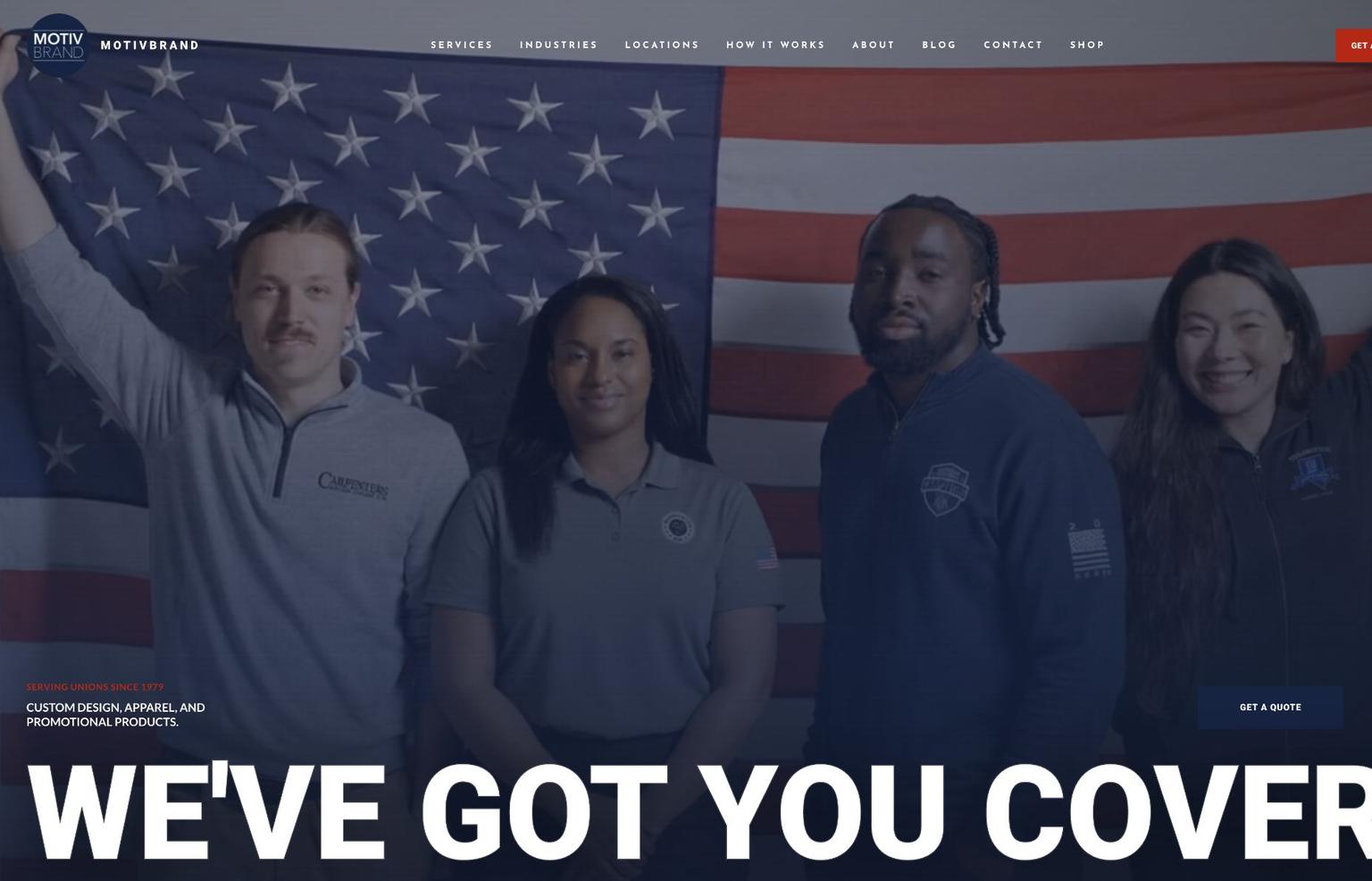
The central decision was to organize the site around the customer and the meaning of the work—not around a catalog of miscellaneous products.
The public website explains and sells the relationship while a separate shop remains a distinct commerce destination.
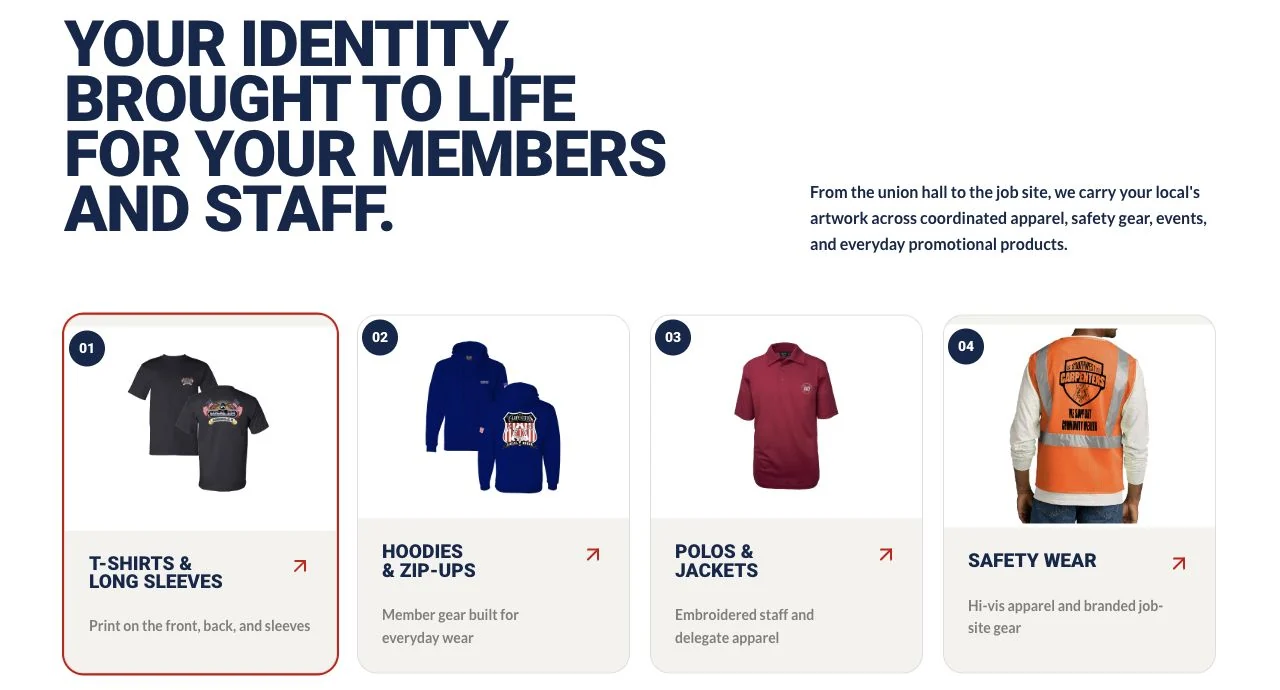
The product and service pages answer different questions. The product section helps a buyer see the kinds of apparel and gear available. Service and trade pages explain the work behind those products, including custom artwork, logo renewal, and options for union-made production. Project examples give the buyer something specific to evaluate.
- Clarify the category
- Present branding, apparel, and promotional products for labor unions and organizations nationwide since 1979.
- Put union understanding first
- Make member identity, trade history, original illustration, production details, and union-made options visible.
- Separate customer intents
- Create deliberate paths for services, trades, regions, process, history, projects, resources, inquiries, and the shop.
Carry product interest into the quote form
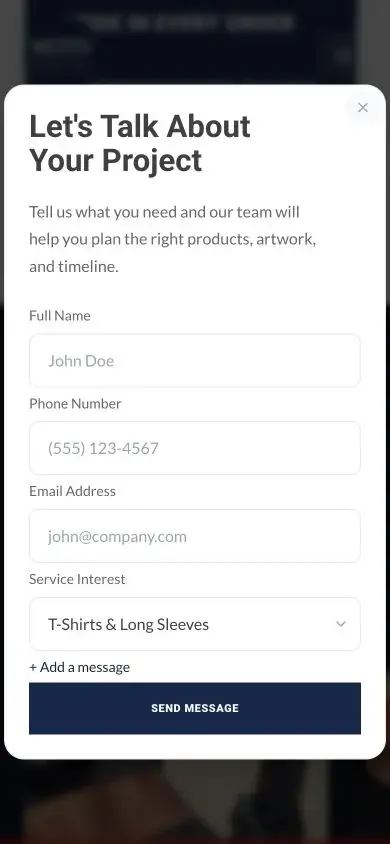
The product section gives buyers a way to compare categories such as shirts, hoodies, polos, and safety wear. Selecting a product category opens the quote form with that interest already selected. The inquiry keeps its product context when the buyer moves from browsing to contacting the team.
The production process answers questions the quote form alone cannot. The website walks through sharing the idea, reviewing artwork and a proof, approving the details, and producing and delivering the order. That gives a union buyer a way to understand when choices about artwork, products, and timing are made.
- Services
- Separate apparel, promotional products, hall graphics, custom branding, logo work, and related product categories.
- Industries
- Address electrical, plumbing, sheet metal, operating engineers, laborers, Teamsters, and other audiences in their own context.
- Locations
- Explain Los Angeles roots and nationwide support across four regions without implying false local offices.
- Process
- Share → Design and proof → Approve → Produce and deliver.
- Inquiry
- Capture the visitor’s name, email, local or organization, subject, and project message for a useful team conversation.
Give services and trades their own search destinations
The redesign replaces one broad homepage with deliberate routes for the topics customers actually explore.
A buyer looking for union apparel, a trade representative looking for examples relevant to their members, and a prospect learning how proofing works each need different information. The redesign gives these subjects distinct pages, with company history and contact information available as shared reference points.
Launch the redesign and support it after handoff
The delivered website brings the company’s history, union audiences, services, production process, and inquiry paths together. Loskutech continues to manage and support the site after launch. Project records document follow-up work on the quote form, including a fix and testing after the team reported a scrolling and submission issue.
- Website Redesign
- Strategy, information architecture, visual redesign, content restructuring, development, migration, and launch.
- Managed Websites
- Ongoing operation, maintenance, support, and management after launch.
- SEO Foundation
- Intent-led architecture across services, industries, locations, company content, and resources.
- Lead Capture
- Clear project inquiry paths connected to the customer’s reason for visiting.